Solutions for Data Centres
Over time, systems accumulate debris such as Rust particles, biofilm and sludge which are liable to block heat exchangers, reduce cooling performance and damage pumps and control equipment.
Keeping your data centre running efficiently isn’t just about capacity — it’s about control, reliability, and protection. Air and dirt within chilled water systems can silently reduce cooling performance, increase energy costs and put critical equipment at risk. Microbubbles lead to poor heat transfer and pump wear, whilst debris can block heat exchangers and damage sensitive components. Our high-efficiency air and dirt separators are designed to continuously remove these hidden threats, helping you maintain optimal system performance, reduce maintenance, and extend equipment life.
For facilities with variable loads, integrating a buffer vessel can further stabilise temperatures, prevent short cycling, and improve overall system control — ensuring consistent cooling even under fluctuating demand. In an environment where uptime is everything, small improvements in system quality can make a measurable difference.
Get in touch to see how we can help safeguard your cooling infrastructure.
BUFFER VESSELS
Buffer vessels are a highly recommended engineering solution to ensure continuous cooling, meet reliability standards, and improve energy efficiency. TES systems provide critical backup during power outages and help manage peak energy demand.
- Continuous Cooling (Uptime Reliability) - to ensure uninterrupted operations.
- Peak Load Shifting and Shaving - producing cooling during off-peak hours (when electricity is cheaper) and store it for use during peak times
- Grid Stabilisation and Sustainability - supporting the integration of renewable energy and helping facilities meet net-zero or carbon neutrality goals
- Thermal Buffering - providing stability to the cooling system
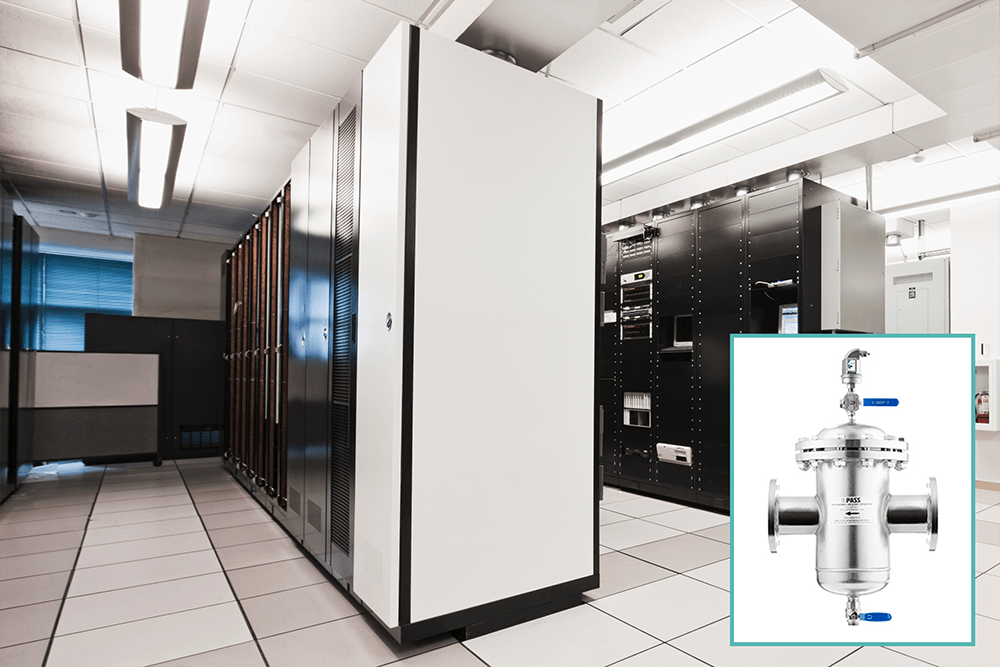
AIR & DIRT Separators
In data centres are crucial components within chilled water-cooling systems that maintain water quality, prevent corrosion, and ensure efficient heat transfer by continuously removing air bubbles, dissolved gases, and solid debris. They operate by slowing down water velocity to allow air to rise and dirt to settle, preventing blockages in delicate cooling coils and protecting pumps from wear.
How They Work
- Air Removal (Deaeration): As water flows through the separator, the specially designed brush helps create a coalescing effect that forces tiny, entrained microbubbles to join. These bubbles then rise and are automatically vented from the top of the unit.
- Dirt Removal (Separation): Heavier particles such as rust, scale, and iron oxide (magnetite) are separated, allowing them to fall to the bottom chamber.
- Magnetic Separation: Many separators used in data centres include a powerful, removable magnet (magnetic rod) that attracts ferrous particles, which are common in steel piping systems.
- Continuous Operation: These filters do not clog, so they can be operated without shutdown.
Why They Are Vital for Data Centres
- Improved Thermal Efficiency: By removing insulating air pockets and dirt buildup on heat exchangers, they ensure maximum heat transfer from the hot servers to the cooling medium.
- Corrosion Protection: By continuously removing dissolved oxygen, they reduce the formation of rust and sludge, which is critical for the long-term integrity of piping, pumps, and heat exchangers.
- Reduced Maintenance and Downtime: Preventing debris from accumulating prevents clogging in critical components, reducing the need for costly manual cleaning and decreasing the likelihood of system failure.
- Increased Component Longevity: Removing abrasive particles protects seals and impellers in pumps, extending the life of the cooling infrastructure.
Dosing pots - for Closed Loop cooling Systems
Dosing pots are highly recommended and necessary in data centres for maintaining closed-loop cooling systems. They are used to safely introduce corrosion inhibitors and glycol, ensuring water quality, mitigating microbial growth, and extending the life of HVAC components.
Key Aspects of Dosing Pots in Data Centres:
- Corrosion Protection: Dosing pots allow for the introduction of chemicals that create a protective layer on metal surfaces to prevent oxidation and leakage.
- Microbiological Growth Control: Stagnant or warm water in cooling circuits can promote bacterial growth, such as biofilm, which reduces heat transfer efficiency. Dosing pots are used to add biocides to treat this.
- Preventing Scale and Fouling: Water-based cooling systems can suffer from mineral buildup (scaling) or debris (fouling), which acts as an insulating layer, reducing heat exchanger performance. Chemical treatment added via pots breaks down these contaminants and keeps the water clean.
- Adding Anti-Freeze (Glycol): In colder climates or specific cooling setups, glycol is added to prevent pipes from freezing and bursting, which would result in massive, long-term downtime.
FAQS
Buffer vessels add thermal capacity to a chilled-water system, helping stabilise temperatures and accommodate changing cooling loads. They can reduce short cycling, improve system control and contribute to maintaining reliable cooling when demand fluctuates.
Air, microbubbles, rust, magnetite and other debris can reduce heat transfer, restrict heat exchangers and contribute to pump and component wear. Air and dirt separators continuously remove these contaminants from chilled-water circuits, helping maintain cooling efficiency and system reliability.