Inline Vs. Side Stream Filtration
What's the best solution for removing air (microbubbles), dirt, and sludge (including magnetite) in your heating or cooling water system? An Inline unit or a side stream unit?
| Inline Separator | Side Stream |
|---|---|
|
The unit is constantly separating air and microbubbles and dirt from the system. As 100% of the entire volume of water flows through the unit all dirt, air & microbubbles are removed. This leads to a longer life for the boilers, pipework, and other expensive equipment. |
As the unit is installed off line or side stream approximately 4% of the water may be only treated. No filtration has taken place leading to corrosion of boilers, pipework, and other expensive equipment. |
|
Separators are easily installed at the optimum position for maximum efficiency. This may be in the flow or return, or even both depending on the system requirements. |
Can only be installed in one position. These may not be installed at the hottest part of the system to remove air and microbubbles. These may not be installed in the return to remove dirt or other particles. Optimum positioning for maximum efficiency cannot be achieved. This is for the removal of any dirt or air and microbubbles. |
|
Excellent costings giving value for money. |
Expensive failures can be costly. |
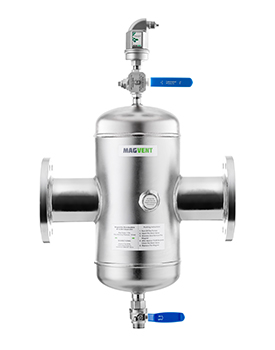

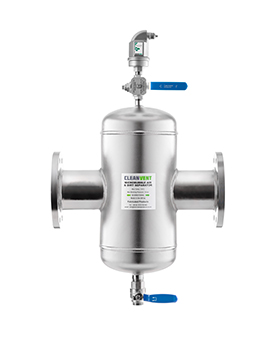
FAQS
The optimum position depends on what needs to be removed and the design of the system. Air and microbubble separation is most effective around the hottest part of the system, while dirt separation may favour the return. Some installations may benefit from treatment at more than one position.
An inline separator treats the system water as it passes through the main pipework, whereas a side-stream system diverts only a proportion of the circulating water through the filtration equipment. Inline air and dirt separators can therefore continuously treat the full flow passing through their installation point.
With a local heritage in working with stainless steel, we offer superior stainless steel air and dirt separators.
- Reduced Lifecycle Costs
- Lighter Weight
- Environmentally Friendly
- 100% Recyclable
- Reduced Energy Costs
- British Design & Manufacture
- Easy to install and handle
- Corrosion Resistant
Are you a mechanical or electrical contractor or consultant?
We specialise in ensuring you have the correct Air and Dirt Separator specified for your building projects. Give us a call to speak to one of our experts or click below for a quick reference guide.
Quick Reference Guide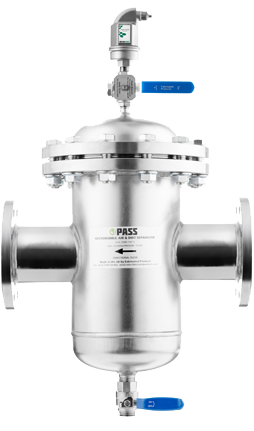
ON ALL OF OUR STAINLESS STEEL AIR & DIRT SEPARATORS AND EASYTREAT
Learn More