Air & Dirt Separators
We have a range of products designed and built to prolong the life of your boiler by removing air and dirt in either single or dual-purpose appliances.
Solutions for Data Centres
In data centres are crucial components within chilled water-cooling systems that maintain water quality, prevent corrosion, and ensure efficient heat transfer by continuously removing air bubbles, dissolved gases, and solid debris. They operate by slowing down water velocity to allow air to rise and dirt to settle, preventing blockages in delicate cooling coils and protecting pumps from wear.
How They Work
- Air Removal (Deaeration): As water flows through the separator, the specially designed brush helps create a coalescing effect that forces tiny, entrained microbubbles to join. These bubbles then rise and are automatically vented from the top of the unit.
- Dirt Removal (Separation): Heavier particles such as rust, scale, and iron oxide (magnetite) are separated, allowing them to fall to the bottom chamber.
- Magnetic Separation: Many separators used in data centres include a powerful, removable magnet (magnetic rod) that attracts ferrous particles, which are common in steel piping systems.
- Continuous Operation: These filters do not clog, so they can be operated without shutdown.
Why They Are Vital for Data Centres
- Improved Thermal Efficiency: By removing insulating air pockets and dirt buildup on heat exchangers, they ensure maximum heat transfer from the hot servers to the cooling medium.
- Corrosion Protection: By continuously removing dissolved oxygen, they reduce the formation of rust and sludge, which is critical for the long-term integrity of piping, pumps, and heat exchangers.
- Reduced Maintenance and Downtime: Preventing debris from accumulating prevents clogging in critical components, reducing the need for costly manual cleaning and decreasing the likelihood of system failure.
- Increased Component Longevity: Removing abrasive particles protects seals and impellers in pumps, extending the life of the cooling infrastructure.
FAQS
An air and dirt separator continuously removes trapped air, microbubbles and solid contaminants from the water circulating through a heating or cooling system. This helps protect boilers, chillers, pumps and heat exchangers while maintaining efficient heat transfer and system performance.
The correct air and dirt separator depends on factors including system flow rate, pipe size, system volume, operating conditions and whether magnetite removal is required. Fabricated Products offers several options including CleanVent, MagVent and 1Pass, as well as a product selector to help identify the most suitable unit.
With a local heritage in working with stainless steel, we offer superior stainless steel air and dirt separators.
- Reduced Lifecycle Costs
- Lighter Weight
- Environmentally Friendly
- 100% Recyclable
- Reduced Energy Costs
- British Design & Manufacture
- Easy to install and handle
- Corrosion Resistant
Are you a mechanical or electrical contractor or consultant?
We specialise in ensuring you have the correct Air and Dirt Separator specified for your building projects. Give us a call to speak to one of our experts or click below for a quick reference guide.
Quick Reference Guide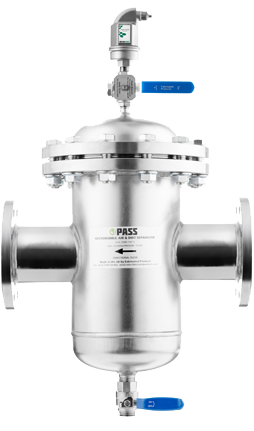
ON ALL OF OUR STAINLESS STEEL AIR & DIRT SEPARATORS AND EASYTREAT
Learn More